Strategy
Luka Nonato

Problem
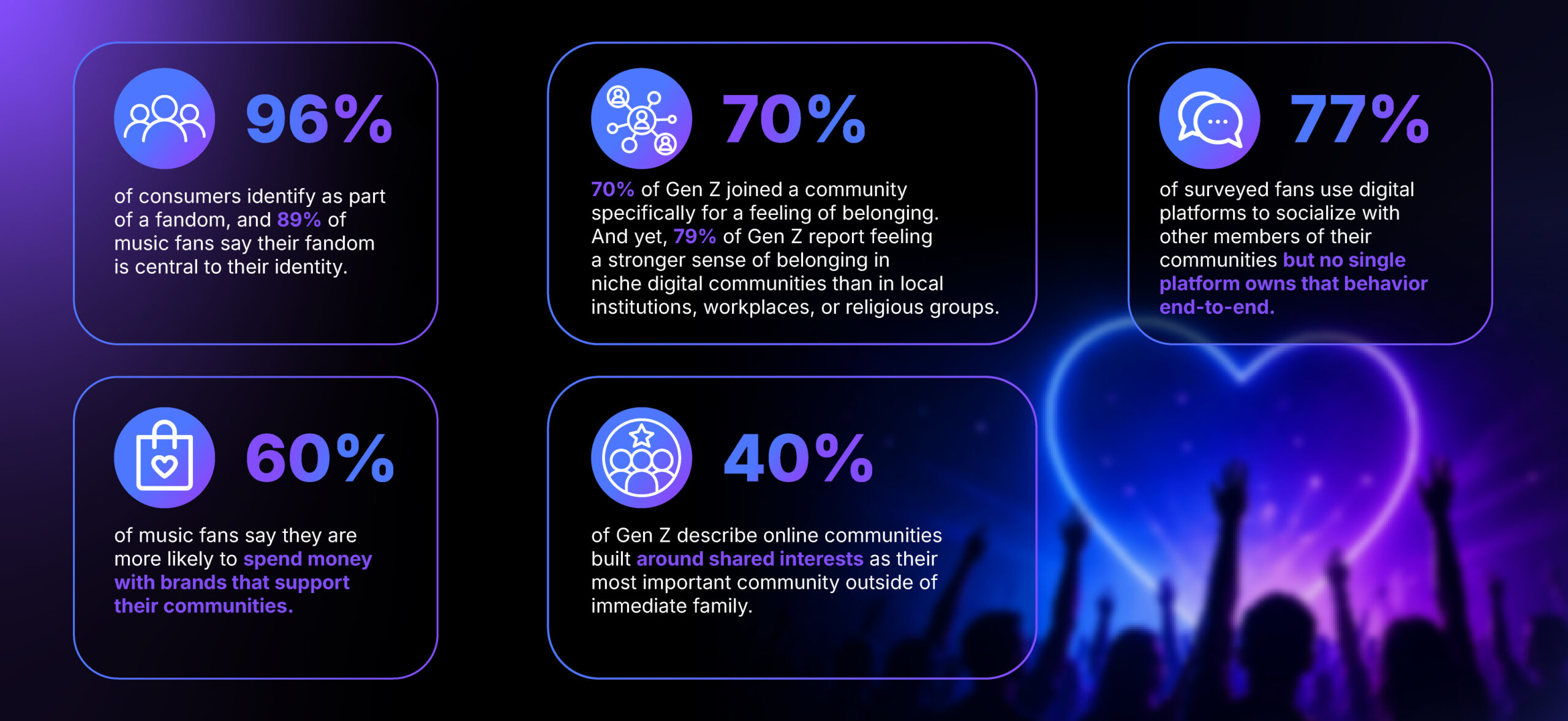
Fandom today is fragmented. Content lives on Instagram, conversations happen on X, communities organize on Discord, and real-life moments happen completely outside any official platform. The tools exist for fans to follow artists. Nobody built the tools for fans to find each other.
Insight
People want to share what they love with someone who gets it, they just don’t know how to find them.
Audience
Gen Z and Millennials aged 18-35, highly engaged with music, culture, and digital community. They don’t just consume, they participate creating fan edits, writing theories, organizing meetups, and building identities around their fandoms. They value belonging over acces
Product Design (UX/UI)
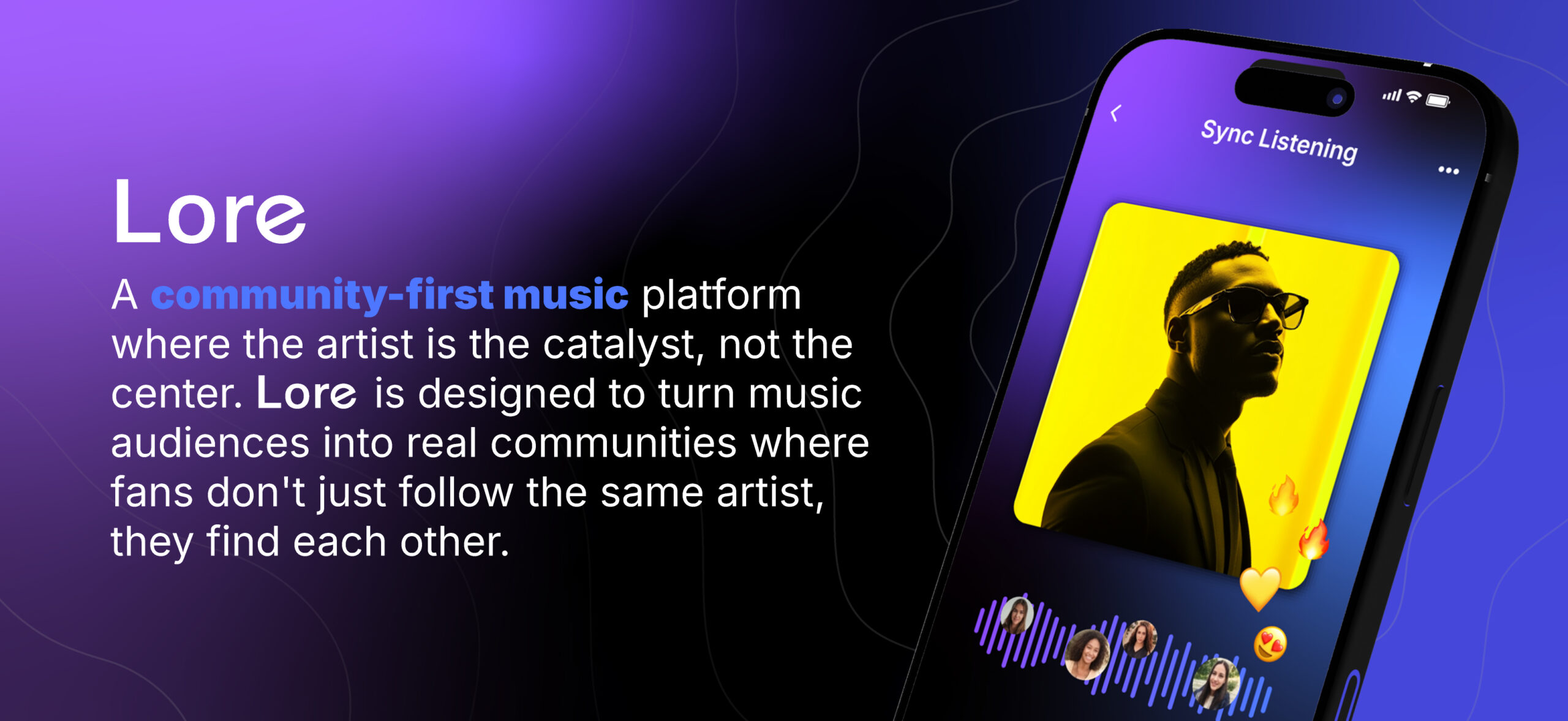
The platform runs on two parallel experiences: artists get a dedicated space to publish, connect, and monetize, and fans get a social ecosystem built around shared identity, local proximity, and real-life moments. The two sides feed each other, but neither is a prerequisite for the other. You don’t need to follow an artist to find your people, you just need to care about the same music.
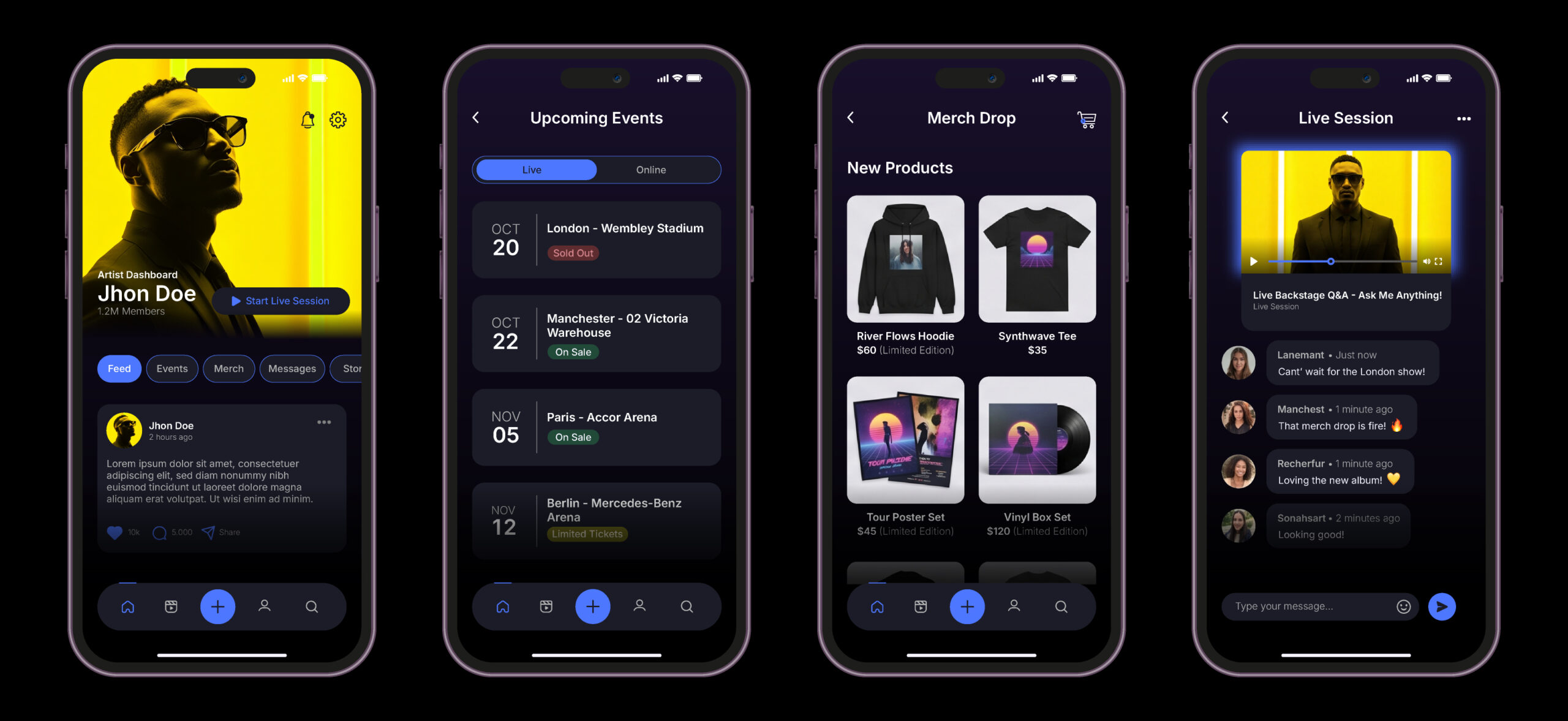
Artist Layer
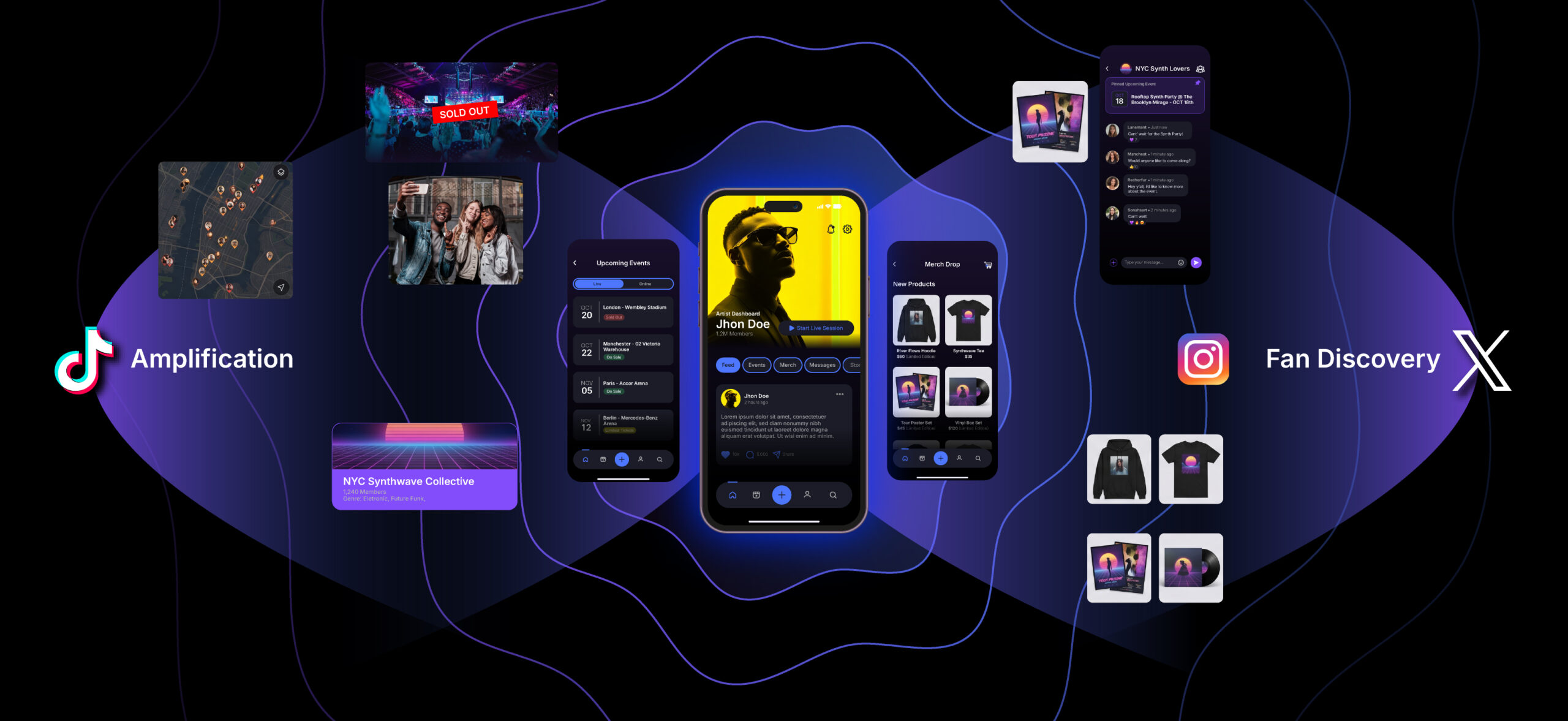
The familiar infrastructure, done better. Artists can host live sessions and listening parties, drop merch, run polls, share content, start conversations, and maintain an official calendar, all in one place.
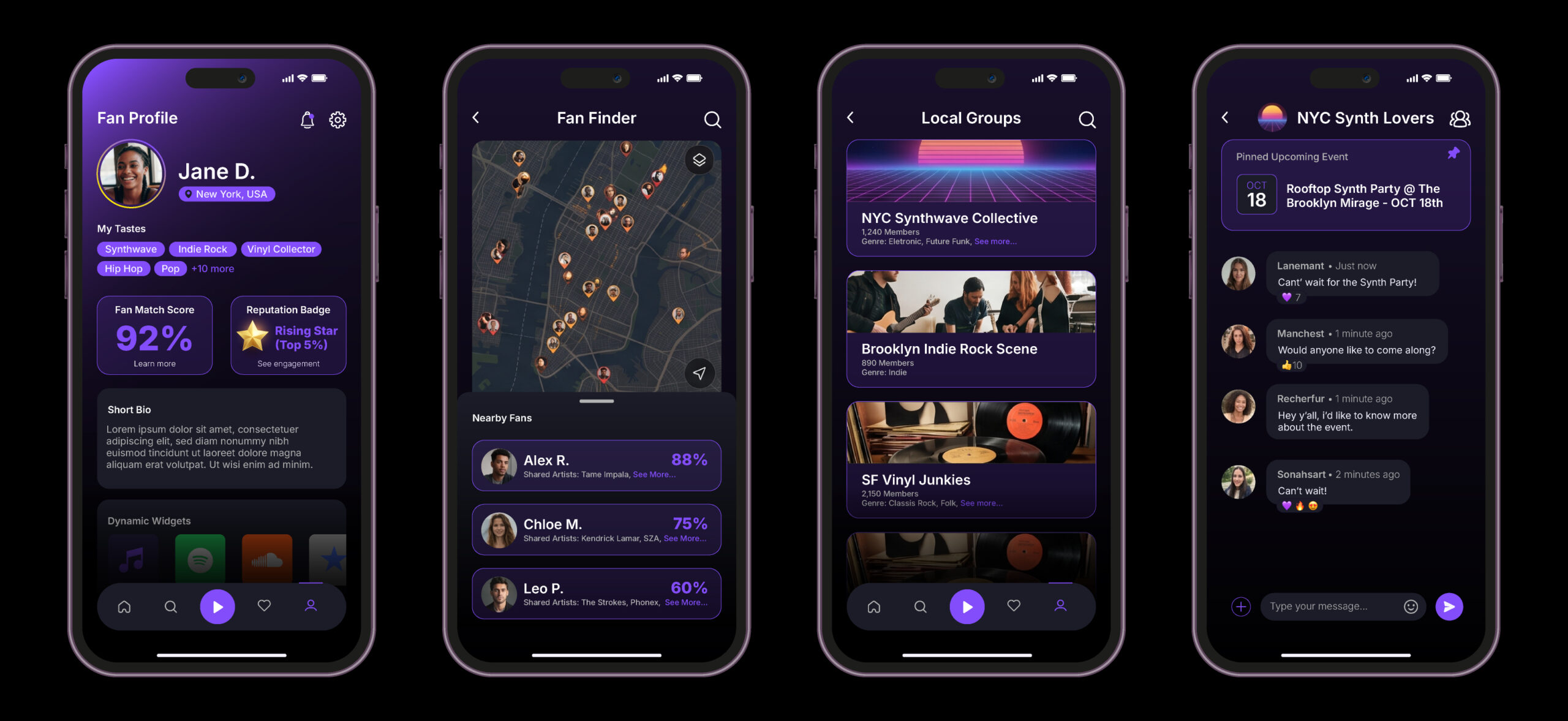
Community Layer
The social graph built around taste, not followers. Fans build profiles around the music they love and where they are, and the platform uses that to surface people worth meeting through Fan Compatibility, which shows what you have in common before you say a word, and Find Fans Near You, which connects you with people in your city who listen to the same things. The more you participate, joining groups, attending events, starting conversations, the more your fan reputation grows, turning engagement into identity.
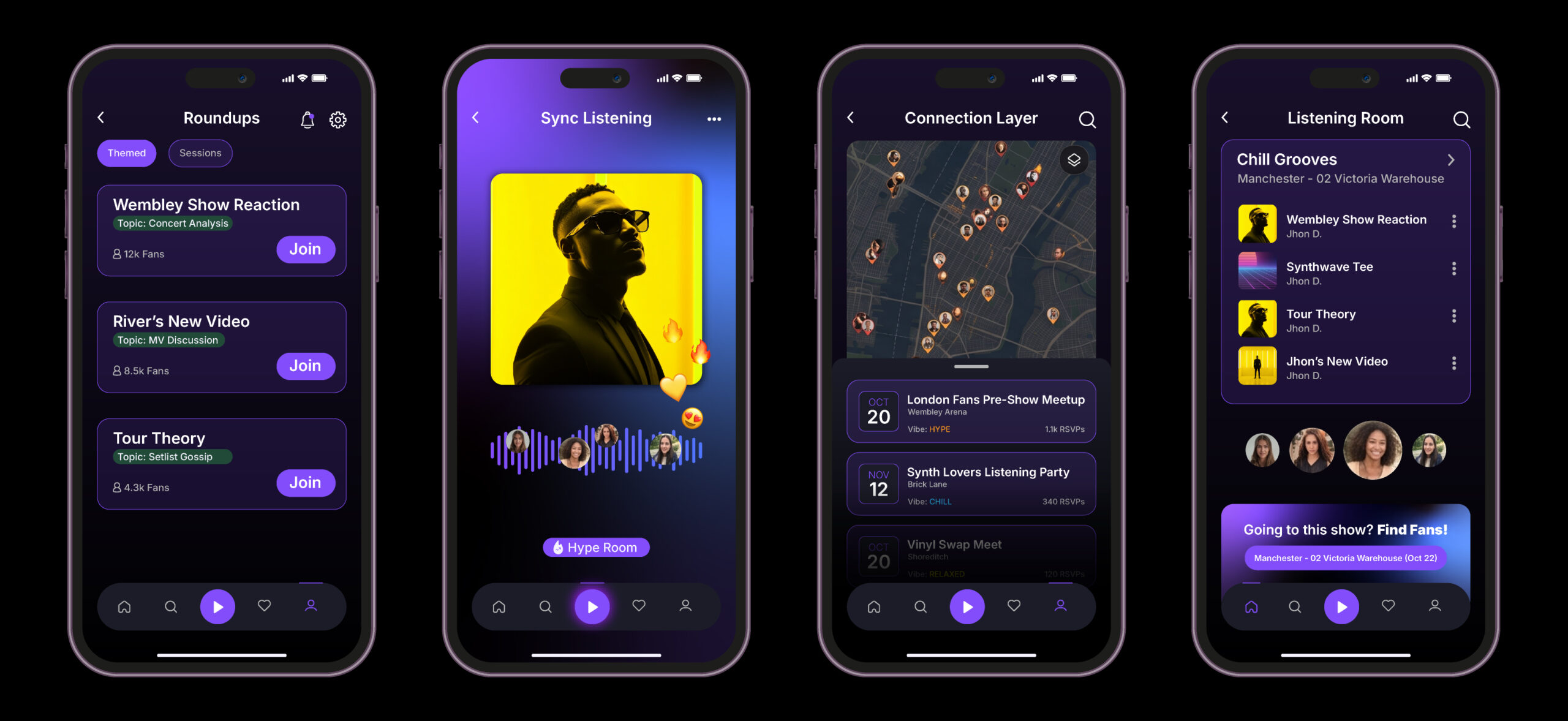
Connection Layer
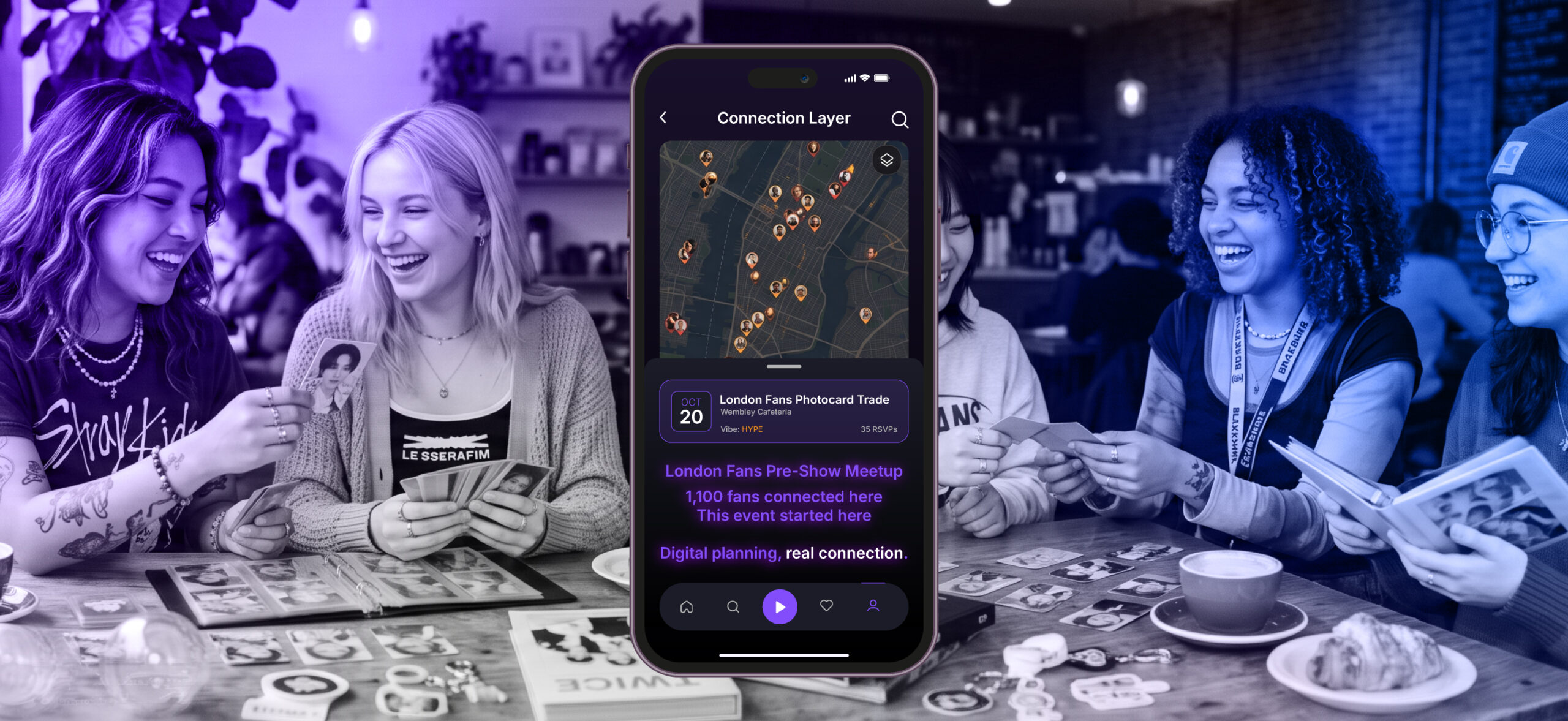
Once you find your people, this is where you actually connect with them. Roundups let anyone open a session around a theme, like a new album reaction, a fan theory, or a “who’s going to this show” conversation. Sync listening rooms let fans hear music together in real time, with reactions happening as the songs play. Fan challenges and mood-based queues keep the community alive between releases. When fans are ready to take it further, the platform makes that easy with a space for fan-created events, official listings, and local businesses that host and sponsor gatherings, bringing the community off the screen and into the same room.
Go-To-Market
The launch strategy is built the same way the product is: from the community out.
Phase 1 – The Right Artist
Launch with one mid-size or independent artist with a small, but highly engaged fandom. Artists whose fans already organize, already talk to each other, and already show up. One city, one community, one tight beta group. Fan accounts and community leaders join as founding members, not paid influencers to shape the culture of the platform before it scales, making everything that follows feel organic rather than manufactured.
Phase 2 – Fans Become the Campaign
The product is designed to generate content by existing. Meetups get posted, listening rooms get shared, new friendships get documented. The strategy isn’t to build campaigns, it’s to build the conditions for the behavior, then let it circulate on TikTok, Instagram, and X where fandom already lives. The best advertising for a community platform is proof that the community is real.
Phase 3 – Proof in a Room
A physical event tied to a release or tour moment, a watch party, pop-up, or listening session, makes the platform visible in the real world. This is the PR moment: proof that the app moved fandom from a screen into a room, pitched simultaneously to music, tech, and culture press.
Why It Works
The platform is free to join, that’s what builds the community. Revenue comes from premium fan subscriptions with early access, exclusive content, and features like private listening rooms and early event registration, merch and ticket commissions, and revenue share with artists monetizing their audiences directly inside the platform.
Artists get what no social network has ever offered: a real understanding of who their most engaged fans are, where they are, and what they’re building together with data that lives inside a dedicated community space, not scattered across five platforms. Fans get what they’ve always wanted but never had in one place: a way to find each other, connect over what they love, and turn a shared obsession into real friendship.